
Houses for rent in Abuja vary widely: PrivateProperty listed houses from about ₦4,000,000 to ₦50,000,000 a year on 9 November 2026, while secondary guides list self-contained units from about ₦800,000; PropertyPro’s cheapest all-property listing was ₦30,000, not a house-specific figure. Figures were checked on 9 November 2026 using dated listing-portal snapshots; see how Nigeria Homes sources and dates rent figures. There is no single Abuja rent: asking prices vary sharply by district. This guide uses dated asking rents from named listing portals, not achieved rents or valuations, and breaks down the fees and verification steps so you can budget and inspect before paying anything.
Key takeaways
- Asking rents are a wide range: PrivateProperty houses run from about ₦4,000,000 to ₦50,000,000 a year; secondary guides list self-contained units from ₦800,000, and PropertyPro’s ₦30,000 cheapest listing is all-property, not house-specific. The median house ask is around ₦19.6M on PrivateProperty (Oct 2026).
- Move-in fees usually add 25–35% to the rent: about 10% agency, 5–10% legal and 5–10% caution, plus service charge where it applies.
- Pay nothing before a verified physical or live video inspection, and never transfer to a personal account without a signed agreement and matching ID.
- A proposed FCT rent bill would cap advance rent at 12 months and create a housing agent register, but it is not law yet.
Source: PrivateProperty Nigeria, PropertyPro Nigeria, Closr, November 2026
How much are houses for rent in Abuja? The short answer
The honest short answer: Abuja rent is a range, not one average. On 9 November 2026, PrivateProperty listed 125 houses for rent in Abuja with an average asking price of about ₦17M and a median of ₦19.6M a year (October 2026). That median hides the spread: the cheapest house on the page was ₦4,000,000 and the most expensive was ₦50,000,000.
Why a single average Abuja rent misleads. Portal averages mix houses, flats, shops, offices and land. PropertyPro showed 2,744 properties for rent in Abuja at an average of ₦9,891,722 on 9 November 2026, but that figure includes commercial listings and is useless as a house budget. District averages carry the same mix: Maitama’s PropertyPro average was ₦30,000,000 while Kubwa’s was ₦3,500,000, but both include offices, shops and land as well as houses.
Asking rent versus what tenants actually pay. The figures in this article are asking rents—the price a landlord or agent advertises—not the final agreed rent or a valuation. Use the district table as a budget benchmark, then verify any live listing against it.
The sources show district and unit-type differences; service charge applies in some estates. In high-demand districts, landlords may also ask for two years’ rent upfront, though one year is the common convention. A proposed FCT bill, HB.2839, would cap compulsory advance rent at 12 months, but it had only passed second reading on 4 November 2026 and is not law.
Houses for rent in Abuja by district: dated rent ranges
Asking rents vary more by district than by number of bedrooms. PropertyPro district pages, checked between 8 and 9 November 2026, show average asking rents for all property types from ₦3,500,000 in Kubwa and Lugbe to ₦30,000,000 in Maitama. The chart below ranks those district averages from lowest to highest. Each average covers every property type PropertyPro lists in that area, so it is not a house-only figure.
Source: PropertyPro Nigeria district pages, 8–9 November 2026
The table below adds indicative unit-type ranges from a secondary guide published 8 October 2026, because no official source gives per-unit figures by district. The guide’s ranges should be treated as a rough view, not a market average: its author does not state a sample size, and other guides disagree.
| District | Typical property in the range | Indicative annual asking rent | Source and date |
|---|---|---|---|
| Maitama | 3-bedroom flat | ₦29m–₦50m | Mushrooms.ng, 8 Oct 2026 |
| Asokoro | 2-bedroom flat | ₦8m–₦13.5m | Mushrooms.ng, 8 Oct 2026 |
| Wuse II | 2-bedroom flat | ₦5.5m–₦21m | Mushrooms.ng, 8 Oct 2026 |
| Garki | 2-bedroom flat | ₦5m–₦7m | Mushrooms.ng, 8 Oct 2026 |
| Jabi | 2-bedroom flat | ₦3.9m–₦20m | Mushrooms.ng, 8 Oct 2026 |
| Life Camp | 2-bedroom flat | ₦4.5m–₦6m | Mushrooms.ng, 8 Oct 2026 |
| Apo | 2-bedroom flat | ₦3.9m–₦6m | Mushrooms.ng, 8 Oct 2026 |
| Lugbe | Self-contain | ₦800k–₦2.1m+ | Mushrooms.ng, 8 Oct 2026 |
| Lugbe | 2-bedroom flat | ₦3m–₦6m+ | Mushrooms.ng, 8 Oct 2026 |
| Kubwa | Self-contain | ₦800k–₦2m+ | Mushrooms.ng, 8 Oct 2026 |
| Kubwa | 2-bedroom flat | ₦3m–₦4m+ | Mushrooms.ng, 8 Oct 2026 |
| Nyanya, Karu, Mararaba | 1-bedroom | ₦900k–₦1.7m | Mushrooms.ng, 8 Oct 2026 |
Central and diplomatic districts: Maitama, Asokoro and Wuse. Maitama and Asokoro carry the highest asking rents in the portal averages. A 3-bedroom flat in Maitama was quoted from ₦29M to ₦50M a year in one guide, while Asokoro 2-bedroom units ranged ₦8M–₦13.5M. Wuse II sits a step below, with 2-bedroom flats from ₦5.5M–₦21M.
Family and estate districts: Gwarinpa, Jabi and Life Camp. Gwarinpa is a large self-contained estate with many families; one guide gives 2-bedroom flats at ₦4M–₦5M a year and service charges of ₦150K–₦500K. The PropertyPro averages for these areas are ₦7M (Gwarinpa), ₦12M (Jabi) and ₦7.5M (Life Camp), but those include commercial listings.
Outer and commuter districts: Kubwa, Lugbe, Nyanya and Karu. Kubwa and Lugbe offer the lowest asking rents on PropertyPro, both averaging ₦3,500,000 across all property types. Self-contains start around ₦800,000 a year in both districts, and 2-bedroom flats range ₦3M–₦4M+ in Kubwa and ₦3M–₦6M+ in Lugbe. Nyanya and Karu sit on the eastern corridor with one-bedroom units at ₦900k–₦1.7M, but the same guide calls the traffic the worst in the FCT. PropertyPro had only one Nyanya listing and zero for Karu on the snapshot dates, so those ranges come from the secondary guide only.
A single listing is not a market average. The figures are snapshots from the dates shown. The snapshot date for every figure above is 8–9 November 2026 (PrivateProperty Abuja page: 9 November 2026; PropertyPro district pages: 8 or 9 November 2026).
The full move-in cost: rent, agency, legal, caution and service charge

Rent is not the only upfront cost. In Abuja, market convention adds an agency fee, a legal or tenancy agreement fee, a caution deposit and sometimes a service charge. These extra charges can add 25–35% to your upfront cost on top of annual rent, according to renter guides. None of these fees are fixed by law; they are negotiation points, and the percentages below come from secondary guides and tenant accounts, not an official regulator.
Agency fee. The agency fee is usually quoted as about 10% of annual rent, and tenants pay it in the examples the sources cite. It can reach 20% in high-demand areas such as Wuse 2. Always ask for a written fee schedule and a receipt.
Legal or tenancy agreement fee. This is separate from the agency fee and is usually 5–10% of annual rent for preparing the tenancy agreement. Ask what document the fee covers and get a copy of the draft before you pay.
Caution fee. The caution or security deposit is commonly about 5–10% of annual rent. It is meant to be refundable minus damage beyond normal wear and tear, but refund practice in Abuja is inconsistent. The agreement should state the refund conditions, wear-and-tear definition and utility deductions; a 30-day refund after vacating is common practice, not a legal right.
Service charge. In estates or blocks with shared facilities, service charge covers security, cleaning, generator, water and waste disposal. It often sits outside the rent. One guide puts Gwarinpa estate service charges at ₦150K–₦500K a year, but the general Abuja range is from tens of thousands to over a million naira. Ask for the current schedule and past receipts before signing.
Illustrative move-in budget. This is an illustration, not a real listing. If a two-bedroom flat in Gwarinpa is advertised at ₦1,500,000 a year, the guide’s worked example adds about ₦450,000 in fees and deposit, bringing the upfront total to about ₦1,950,000 before any service charge. Use that structure for your own budget, but confirm each line item in writing.
Do not pay any fee before you view
Never pay a viewing fee, reservation fee, caution deposit or any other money before you have physically inspected the property or completed a live video walkthrough that you control. Paying before viewing is a major red flag in rental scams.
How to find houses for rent in Abuja without wasting weeks
Start with the portals that publish dated asking prices. PrivateProperty listed 125 houses for rent in Abuja on 9 November 2026, and PropertyPro listed 2,744 residential and commercial rentals. Many ads appear on multiple portals, so search the same address across sites to spot recycled photos. Nigeria Property Centre is widely used, but its pages returned HTTP 403 during research, so no figures from it are included here. Jiji could not be verified on the research date; treat every Jiji ad as unverified.
Search by district and unit type. Use phrases like "three-bedroom house for rent Gwarinpa", "self-contain Kubwa" or "house to let Abuja". Verify that the filter actually separates houses from offices before relying on the average shown.
By-owner route. If you rent directly from an owner, ask for proof of ownership, the estate office contact and a draft tenancy agreement before proceeding. You still need a lawyer to review the agreement and conduct a title search.
For agents: confirm an office address, government-issued ID and a written fee schedule. Avoid anyone who demands a viewing fee before the property is seen. If you are abroad, ask for a live video with today’s date and a street sign or landmark; a pre-recorded video is not enough.
How to spot recycled and fake listings. A rent far below the district range, pressure to pay today, an owner who is always abroad, or an account name that does not match the landlord or agency are all red flags. Search the address on a map and call the estate management number from an independent source, not from a screenshot supplied by the agent.
The Abuja rental scam checklist: before you pay any money
A real case from January 2026 shows how easily it goes wrong: an Abuja renter paid a ₦15,000 inspection fee, then transferred ₦9,480,000 to an "agent" introduced by a friend, and never received keys. The friend’s introduction, photos and viewings were not proof. Follow this checklist before letting go of a naira.
- Physically inspect the property or complete a live video walkthrough you control Before any payment
- Call the estate or building management from an independently found number Before any payment
- Confirm the agent’s office address, ID and written fee schedule Before any payment
- Check the landlord’s ID and evidence of ownership Before any transfer
- Obtain a signed tenancy agreement and receipts before paying Before any transfer
- Transfer only to an account name that matches the landlord or agency Before any transfer
- Keep chats, receipts, bank records and dated photos After payment
- Report fraud to the NPF-NCCC e-reporting portal and your bank After payment
Before inspection: do not pay a viewing fee, reservation fee or caution fee. Paying before viewing is a red flag. Insist on seeing the address on a map and matching the building to the photos.
Before transfer: never pay into a personal name without a written agreement, a receipt and a matching ID. If the account name is different from the landlord or agency, that is a red flag.
After payment: keep every receipt and chat. If money has already been paid and the property never materialises, report to your bank, keep the transaction reference, and file a report with the Nigeria Police Force National Cybercrime Centre e-reporting portal.
How to verify the landlord, agent and property
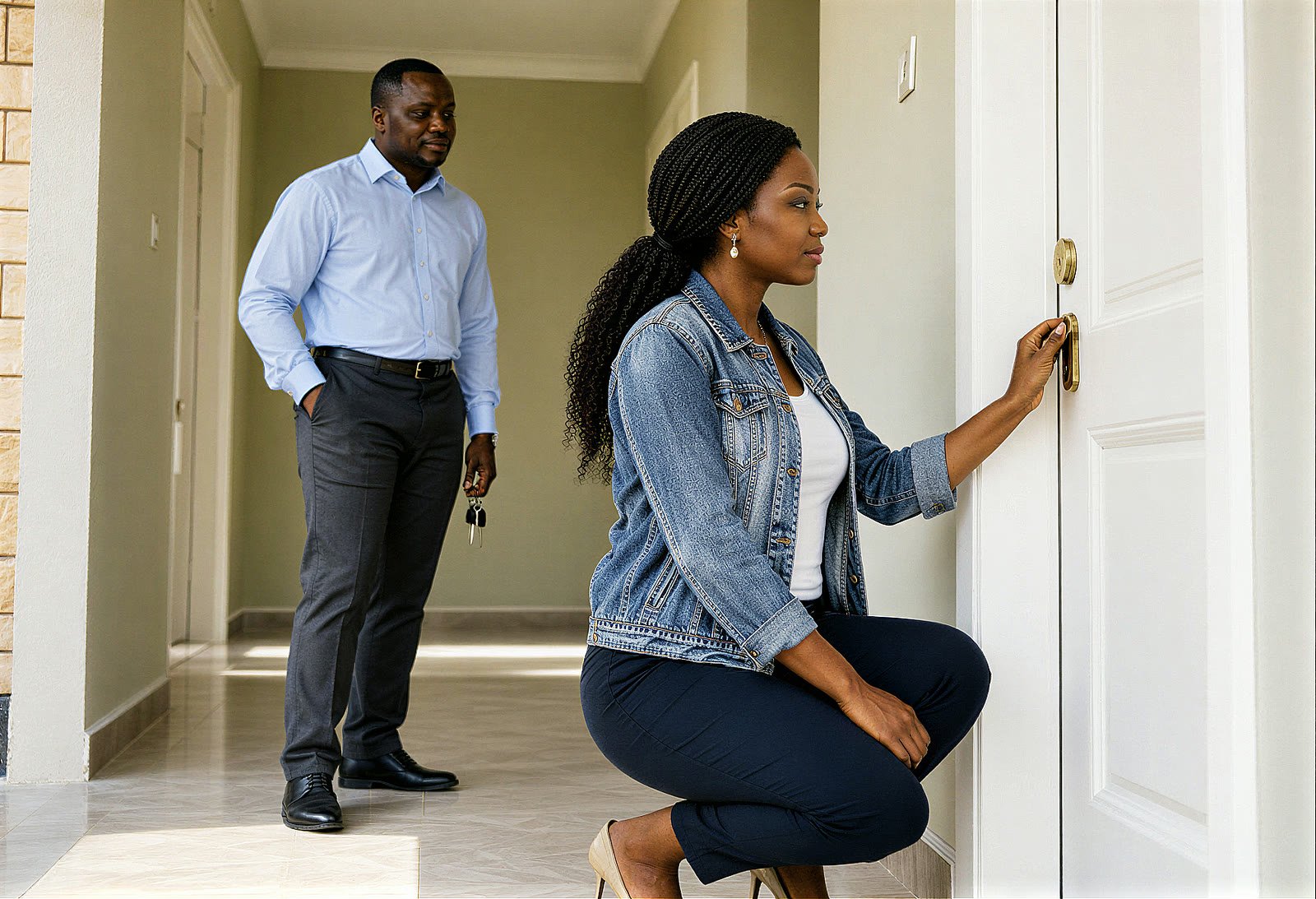
Ask for the landlord’s ID, evidence of ownership, the agent’s written authority and a draft tenancy agreement before you pay. A rental may not require every ownership document, but you need enough to confirm the person who is signing actually controls the property.
Documents to ask for. For a rental, the key question is whether the person signing has authority to let the property. Read how Nigeria Homes sources and dates rent figures before you accept property documents at face value.
What to check at AGIS or the estate office. The Abuja Geographic Information Systems (AGIS) holds land records. An AGIS legal search compares the documents shown against the registry’s record for a plot. It can reveal the recorded holder and encumbrances, but it cannot verify the seller’s identity, confirm the physical plot, resolve disputes or guarantee validity. A third-party guide reports a residential search fee of ₦10,000 (₦20,000 commercial) and results within 24 hours to three days, but AGIS fees change and the official portal could not be verified on the research date. Check the current fee before paying.
When to instruct a lawyer. A Nigerian property lawyer can run the searches, review the tenancy agreement and flag missing consents. Reported lawyer fees for a property search range from ₦150,000 to ₦250,000.
Renting a house in Abuja from the UK or the diaspora
A practical diaspora checklist:
- Use a trusted representative and a live video inspection; record the date and time and keep the recording.
- Verify the address independently on a map and call the estate office before sending money.
- Pay in tranches only after a signed agreement and receipts; keep bank records for every transfer.
- Confirm whether the rent is annual, whether service charge is separate, and how the caution fee refund will be handled.
- Instruct a lawyer to review the agreement and run searches before you pay.
What not to do. Do not rely on pre-recorded videos or agent-supplied screenshots; check the live exchange rate before converting rent. On 9 November 2026, one converter showed 1 GBP = 1,794.4 NGN at 06:05 PM UTC, but rates move daily and differ by transfer provider. Check the live rate and the provider’s quoted rate before you transfer.
Questions to ask before you sign, and your next step
Before you sign a tenancy agreement, ask these questions and get the answers in writing:
- Is the rent annual or will the landlord accept monthly or quarterly payments?
- What is the advance rent: one year, or two? Does any proposed FCT rule apply?
- What is the agency fee, legal fee and caution deposit, and are they refundable?
- What service charge applies, what does it cover, and can you see the last three receipts?
- Who is responsible for repairs, generator fuel, water and security?
- What is the notice period for ending the tenancy, and what happens at renewal?
- Are subletting, pets and visitors restricted?
- How and when will the caution deposit be refunded, and what deductions are allowed?
Notice periods in the FCT are often cited as one week for a weekly tenancy, one month for monthly, one quarter for quarterly and six months for yearly tenancy, plus a 7-day notice of intention to recover possession before court action, but the law is disputed and can be varied by agreement; have a lawyer verify any notice you receive. Self-help eviction by a landlord is unlawful.
Put every promise into the tenancy agreement: rent, fees, service charge, repair duties, refund conditions, notice and renewal. Collect a receipt for each payment and keep dated photos or videos of the property at move-in.
- Set a budget using the district ranges above, and add 25–35% for agency, legal, caution and service charge.
- Shortlist three to five listings, search each address on a second portal, and request a physical or live video inspection before paying anything.
- Ask for the landlord’s ID, ownership evidence, a draft agreement and the agent’s written schedule; then instruct a lawyer to review everything before you transfer.
Your next step: before you rely on any rent figure here, read how we source and date rent figures so you know what the ranges can and cannot tell you. Then verify every live listing against the dated district table above.
Sources
- Find Houses For Rent in Abuja (125 Listed) | Private Property Nigeria
- 2,744 Houses, Flats and Office For Rent in Abuja | PropertyPro Nigeria
- Property For Rent in Maitama, Abuja | PropertyPro Nigeria
- Property For Rent in Asokoro, Abuja | PropertyPro Nigeria
- Houses, Flats and Office For Rent in Jabi | PropertyPro Nigeria
- 126 Houses, Flats and Office For Rent in Life Camp | PropertyPro Nigeria
- Property For Rent in Gwarinpa, Abuja | PropertyPro Nigeria
- Property For Rent in Apo, Abuja | PropertyPro Nigeria
- 162 Houses, Flats and Office For Rent in Kubwa | PropertyPro Nigeria
- 231 Houses, Flats and Office For Rent in Lugbe | PropertyPro Nigeria
- Houses, Flats and Office For Rent in Nyanya | PropertyPro Nigeria
- Best Areas to Live in Abuja (2026): By Budget & Lifestyle
- Living in Gwarinpa, Abuja (2026): Rent, Vibe & Who It Suits
- Abuja Rental Prices 2026: House & Apartment Rent Guide
- First-Time Renter Checklist: Abuja Edition
- The True Cost of Renting in Abuja: Every Fee, Explained (2026)
- Rent, Caution Fee, Agency & Legal Fees in Nigeria: What’s Standard?
- Abuja’s Proposed Rent Law Targets Landlords with Fines of Up to ₦20m
- House Passes Abuja Rent Regulation Bill for Second Reading
- The Law On Recovery Of Premises In Nigeria
- AGIS Land Search Abuja: Step-by-Step Guide
- Requirements and Cost for Search on a Property in AGIS
- How to Spot Rental Scams: A First-Time Renter’s Guide
- Abuja Lady Lost N9.48m to House Rent Fraud
- NPF-NCCC | National Cybercrime Centre E-Reporting Portal
- FCT residents groan under rising house rents, seek stronger regulation
- GBP to NGN – British Pound to Nigerian Naira Converter
Frequently asked questions
How much does it cost to rent a house in Abuja?
Asking rents for houses in Abuja varied: PrivateProperty listed houses from about ₦4,000,000 to ₦50,000,000 a year on 9 November 2026, while secondary guides list self-contained units from about ₦800,000 in outer districts. The median house asking rent on PrivateProperty was ₦19.6M a year (October 2026). On PrivateProperty, the median house asking rent was ₦19.6M a year (October 2026).
What fees do agents charge for houses to let in Abuja?
The usual agency fee is about 10% of annual rent, sometimes up to 20% in areas like Wuse 2. Legal or tenancy agreement fee is usually 5–10%, and caution deposit is often 5–10%. These are market conventions, not fixed by law.
How many years’ rent do Abuja landlords ask for upfront?
One full year is the common convention, but two years is sometimes demanded in high-demand districts. A proposed FCT bill, HB.2839, would cap compulsory advance rent at 12 months, but it had only passed second reading on 4 November 2026 and is not law.
How can I verify a landlord or agent before paying?
Ask for the landlord’s ID, evidence of ownership, the agent’s written authority and a draft tenancy agreement. Run an AGIS legal search to check the registry record, and call the estate office independently. Never pay before a physical or live video inspection.
What is a caution fee and is it refundable?
The caution fee is a security deposit, usually about 5–10% of annual rent, meant to cover damage beyond normal wear and tear. It is refundable in principle, but refund practice in Abuja is inconsistent. The tenancy agreement should state the refund conditions and timeline.